
Adolescent health is an important investment in building a future generation that is healthy, resilient, and prepared to lead society. Efforts to promote healthy lifestyles must begin early, as adolescence is a critical period for the development of identity, values, habits, and daily behavioural patterns.
With this in mind, the WIRA – Warrior Initiative for Resilience and Health Advancement programme was conducted in collaboration with the Royal Military College (RMC) on 16 May 2026. Carrying the theme “Strong Body, Resilient Mind, Future Leaders”, the programme focused on holistic adolescent health development through health education, interactive activities, and community engagement.
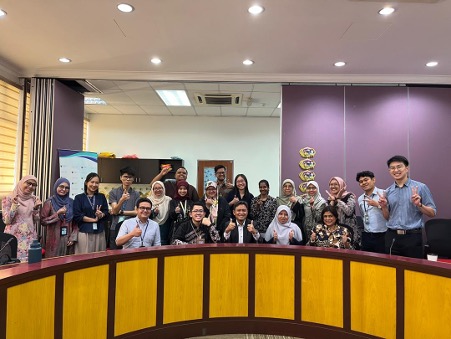
The programme formed part of the field training for 23 Master of Public Health students from the Department of Social and Preventive Medicine, Faculty of Medicine, Universiti Malaya. It involved approximately 400 RMC students, Universiti Malaya staff, and implementation partners from various agencies and institutions.
Health Education Begins Early
Adolescents represent a strategic group in national development. During this stage of life, habits related to nutrition, physical activity, sleep, stress management, mental health, personal hygiene, and the avoidance of risky behaviours begin to take shape. Habits established during adolescence can have long-term effects on physical, mental, and social well-being in adulthood.
In line with the Malay proverb, “melentur buluh biarlah daripada rebungnya”, health education should begin as early as possible. Prevention in public health is not merely about providing information; it is about building understanding, confidence, and skills so that adolescents are empowered to make healthier choices in their daily lives.
Health messages aimed at adolescents must therefore be delivered in practical, interactive ways that reflect the realities of their lives. Information alone is not enough. Young people need support to understand risks, evaluate options, build resilience, and adopt healthier behaviours.
Focus of the WIRA Programme
The WIRA programme focused on improving adolescent health literacy, promoting healthy lifestyles, strengthening mental resilience, and empowering students to make better health decisions.
Key activities included education on vape prevention, mental health awareness, digital addiction, healthy eating, health screening, cancer education, prevention of communicable diseases, Basic Life Support (BLS) demonstrations, and emergency care. The programme also provided educational and career guidance for students preparing to pursue further studies after completing secondary school.
Interactive approaches such as health education booths, quizzes, question-and-answer sessions, group discussions, and role-play activities were used to encourage active participation among RMC students. Through role-play, students were able to explore real-life health scenarios, including peer pressure, stress management, healthy use of digital media, healthier food choices, and seeking help when facing health-related challenges.
This approach made health education more relevant to adolescents’ lived experiences. Students not only received information but were also encouraged to think, ask questions, interact, and relate health messages to their daily lives.
Field-Based Learning for Public Health Students
In addition to benefiting RMC students, the WIRA programme also served as a valuable field-learning platform for Master of Public Health students. Through the programme, they had the opportunity to translate classroom learning into real-world public health practice within the community.
Students were directly involved in planning, implementing, and evaluating programme activities. They were trained to identify relevant health issues, develop educational materials, design delivery strategies, manage activities, communicate with target groups, and collaborate with multiple stakeholders.
This experience is essential in developing leadership, communication, teamwork, problem-solving, and programme implementation skills. It also helps nurture future public health professionals who are not only theoretically grounded but also capable of understanding the real needs of communities.
Field training such as this demonstrates that the effectiveness of health promotion depends not only on the content of health messages, but also on how those messages are planned, delivered, and evaluated within the context of the target community.
Multi-Sectoral Collaboration
The WIRA programme was supported by the Department of Public Health and the Department of Psychological Medicine, Universiti Malaya Medical Centre (UMMC), the Research Development and Medical Education Unit, Faculty of Medicine, Universiti Malaya, the National Cancer Society Malaysia (NCSM), Klinik Khidmat, and Insaf Murni.
Each implementation partner contributed unique expertise to strengthen programme content, covering physical health, mental health, disease prevention, emergency care, cancer awareness, and future development opportunities for students.
The Malaysian Armed Forces Health Services Division also participated through its Mobile Dental Bus service, which provided oral health screening for RMC students. This service strengthened the programme’s comprehensive health component and offered early exposure to the importance of oral health care as part of a healthy lifestyle.
Connecting Knowledge, Practice, and Community Impact
The success of WIRA demonstrates that improving community health requires the involvement of multiple stakeholders. Universities contribute academic expertise and evidence-based approaches; RMC provides a community platform for adolescent health education, while implementation partners strengthen the programme through specialised expertise in their respective fields.
The programme reflects Universiti Malaya’s commitment to experiential learning, cross-sector collaboration, and the development of future public health professionals. Through this approach, students not only learn about health promotion but also gain an understanding of the importance of designing interventions that are relevant, responsive, and impactful for communities.
Overall, WIRA is more than a health awareness activity. It represents an investment in human capital development and community well-being. The programme equips Master of Public Health students to become more competent, community-oriented practitioners who are prepared to meet real-world public health challenges, while also providing direct benefits to adolescents through improved knowledge, awareness, and skills related to healthy living.
Initiatives such as this should continue, as they help bridge the gap between knowledge and practice, universities and communities, and professional training and social impact. Through multi-sectoral collaboration, programmes of this nature can contribute to building more health-literate communities and developing future public health professionals who are ready to lead change towards a healthier, more resilient, and forward-looking society.
Prepared by
Dr Siti Idayu Hasan
Course Coordinator, Health Promotion
Department of Social and Preventive Medicine
Faculty of Medicine, Universiti Malaya
Dr Shazwani Mohamad
Master of Public Health Candidate and WIRA Programme Leader
Department of Social and Preventive Medicine
Faculty of Medicine, Universiti Malaya





You must be logged in to post a comment.