
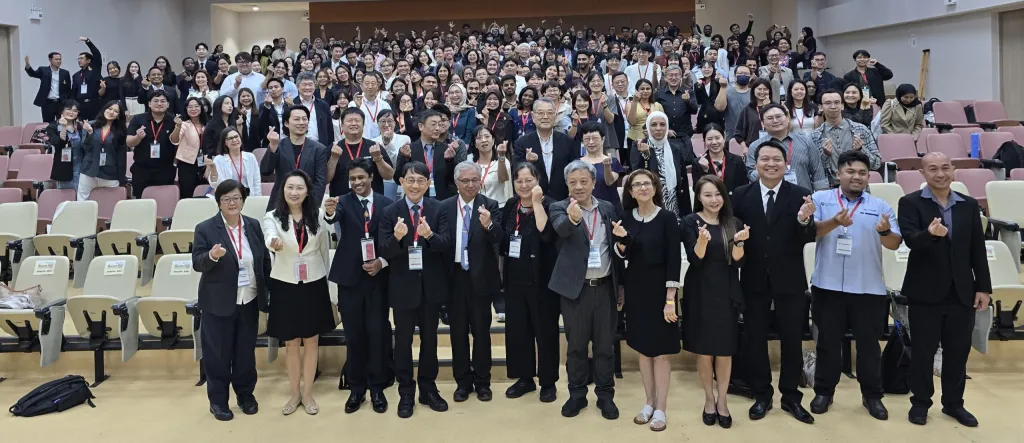
The World Hepatitis Summit 2026 in Bangkok has taught me a great deal, not just as a researcher, but also as an advocate. For many years, the work we have done in HIV has yielded positive results, particularly for people who use drugs. We hope to see similar benefits in reducing new HIV infections among other key populations as we replicate a community-first model that puts people at the centre of our efforts.
That said, people who use drugs must continue to remain at the centre of our work, whether in research or priority programme areas. Viral hepatitis, particularly Hepatitis C, remains a major concern, especially where people are not started on treatment quickly.
As a public health practitioner, I advocate for innovations that improve access to treatment, moving beyond screening and clinical settings to meet people where they are, whether in prisons, on the streets, or in the places where they live and work.
We already have the evidence of what works. There are medications proven to cure the virus. In fact, our former Health Director-General, Datuk Muhammad Radzi Abu Hassan, presented at this conference on a shorter treatment duration using sofosbuvir/ravidasvir. Dr Chan Huan Keat from the National Institutes of Health also demonstrated that this same treatment regimen can be cost-saving.
PhD student from the Department of Social and Preventive Medicine (SPM), Dr Mohd Azri Mohd Suan, spoke about developing a simplified, multi-step care pathway designed to streamline and decentralise HCV care in the Pokok Sena and Alor Setar prisons.
My team presented how health inequities can be reduced through innovative approaches to reach those in need of treatment. As such, DrPH candidate, Dr Nadhir Adi Azahar demonstrated how a community-led model, combined with on-site phlebotomy by a community nurse and telemedicine, is feasible in reducing the time to treatment initiation to just 7 days, compared to the average of over 100 days.
Still, more work is needed.
Hepatitis C is not the only challenge. Globally, Hepatitis B mortality is increasing, with deaths now comparable to tuberculosis. Mortality trends should not be increasing.
I have been fortunate to meet with another Malaysian, Dr Dalyana Hamid, who is a family medicine specialist and is there to do her internship with one of the HIV research organizations in Bangkok. She is a Hepatitis B enthusiast, and I have learnt a lot from her.
While we have high Hepatitis B vaccination coverage in the country, we have not yet achieved elimination. Although mother-to-child transmission screening has been strengthened, we are still missing key groups, particularly those born before 1989.
The same applies to syphilis.
Maldives stands as an exemplary case, being the first country to achieve triple elimination of mother-to-child transmission of HIV, syphilis, and Hepatitis B. Representing the Maldives on stage, Dr Sana Saleem shared words that were both simple and powerful: “Work with what you have, and strengthen as you go.”
This made me reflect on the systems we already have in place. Key partners responsible for addressing HIV, including UNAIDS, UNITAID, and the Global Fund, spoke about integrating hepatitis programmes within existing HIV platforms, leveraging current expertise and partnerships. For the first time, Hepatitis B and Hepatitis C are being mentioned explicitly in Global Fund’s upcoming cycle of funding as an investment criteria.
We are not reinventing the wheel. Rather, we want programmes, including hepatitis and harm reduction, to be visible within community and civil society priorities and anchored within existing HIV platforms.
Reducing HCV infections through enhanced harm reduction programmes and improving access to treatment will also help prevent cancer. Hepatocellular carcinoma, the most common type of liver cancer, is often caused by Hepatitis B and C infections.
With this in mind, I hope that cancer divisions will invest more in hepatitis programmes.
Above all, I am reminded of the importance of amplifying community voices. People with lived experience must be given the tools and space to share their stories freely and meaningfully. On global platforms, there is already a strong commitment to facilitating this through storytelling workshops that promote action and advocacy for better policies.
We already have the science.
We already have the solutions.
What we need now is the courage to act and be bold.
I acknowledge that there are things we cannot afford to do, but we cannot afford to not do anything.
Written by Dr Nur Afiqah Mohd Salleh.



You must be logged in to post a comment.