
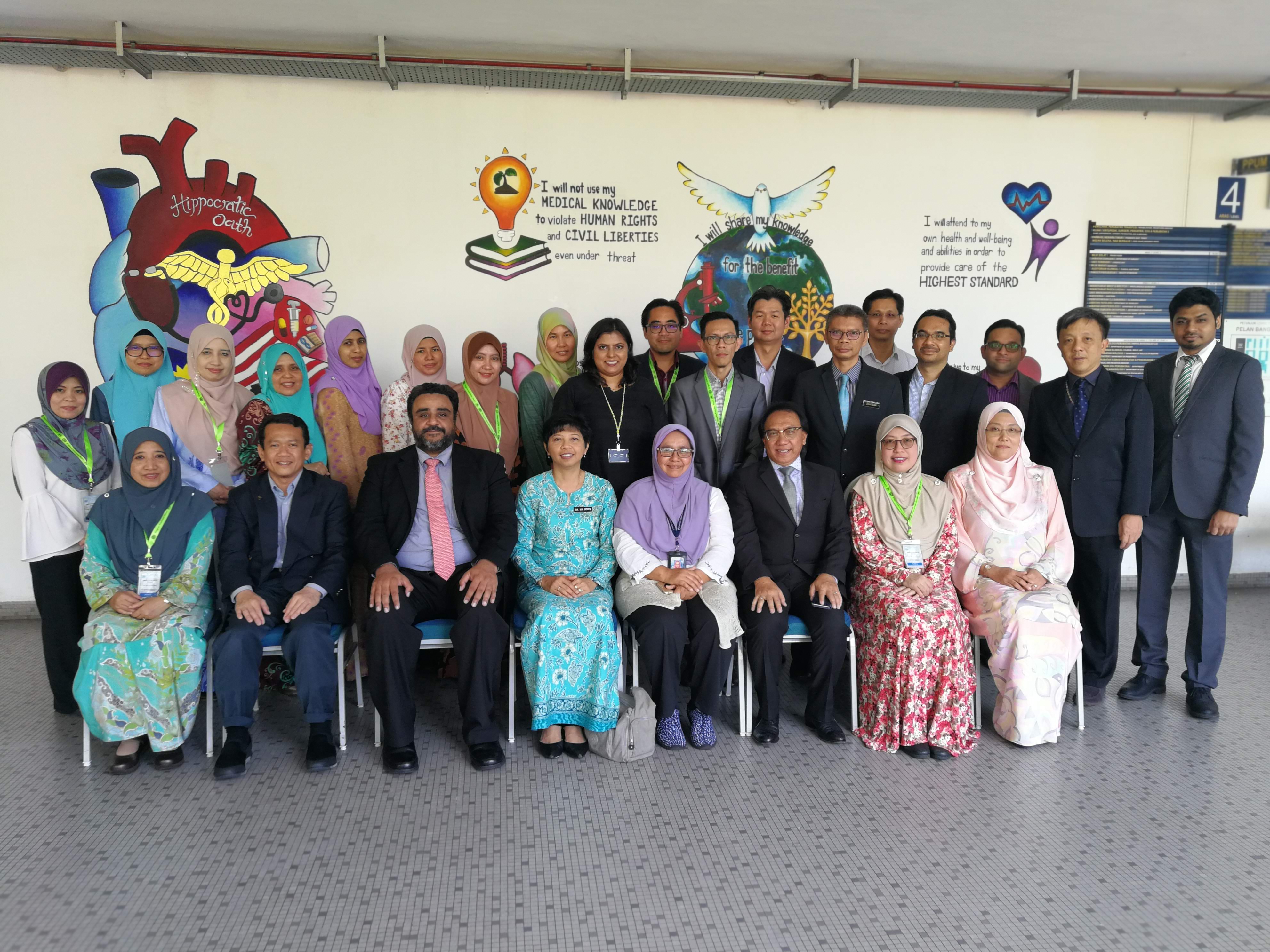
As part of our research exposure programme, we had the opportunity to participate in research-related activities at the Centre for Population Health, Department of Social and Preventive Medicine, Faculty of Medicine, Universiti Malaya (UM). This programme aimed to provide undergraduate psychology students with practical exposure to the research environment, particularly in the areas of psychology, mental health, and public health.
Throughout the programme, we gained insights into how psychological knowledge and research methodologies can be applied to real-world research projects and community health initiatives. The experience also provided opportunities to develop our understanding of research processes, data collection, data analysis, academic writing, and research ethics. In addition, the programme helped us appreciate the importance of interdisciplinary collaboration between psychology, medicine, and public health in addressing mental health and population health challenges.
Overall, this research exposure programme was a valuable learning experience that broadened our academic perspectives, strengthened our research skills, and enhanced our understanding of potential career pathways in psychological and health research.


We were involved in two research projects. The first was conducted under the Centre for Population Health (CePH) and focused on depression and anxiety among adolescents. Through this project, we were introduced to the Super Skills for Life (SSL-R) programme, where we learned about its objectives, activities, and implementation. We were also involved in preparing materials intended to communicate key psychological and social skills to school-aged adolescents.
As part of the SSL-R activities, we selected relevant sessions and developed two educational posters to be presented to school adolescents. The first poster combined Session 5 and Session 7: Managing Stress and Problem-Solving Skills, focusing on recognising the causes and signs of stress, learning strategies to manage stress and emotions, and strengthening problem-solving skills. The second poster was based on Session 6: Relationships and Social Skills, highlighting how interpersonal conflicts may contribute to stress, depression, and anxiety, while promoting positive social support, communication, confidence, and healthy emotional expression.
The second research project was conducted under the Centre for Epidemiology and Evidence-Based Practice (CEBP) and involved a new dengue vaccine study. We gained hands-on exposure to large-scale community data collection, including assisting participants and parents with forms, communicating with them, supporting senior research staff, and helping manage participant flow. We were also exposed to processes involving blood sample collection and dengue vaccination information, including explaining vaccination options to parents and answering basic questions under staff guidance. During one of the large-scale data collection activities, approximately 400 participants were involved.


Throughout the internship, we were able to experience research beyond the classroom by participating in workshops, community-based activities, data collection, and collaborative work with research staff. We also developed practical skills in communication, teamwork, participant engagement, data collection, and professional conduct. The experience allowed us to better understand how psychological and health research is conducted in real-world settings and how research findings and interventions can be translated into activities that benefit communities.
Another important lesson we gained was that research involves more than collecting data. It also requires proper communication, teamwork, organisation, ethical considerations, and the ability to interact respectfully with participants. We learned that research assistants need to follow instructions carefully while also being flexible when dealing with different situations in the field.


Overall, this internship provided us with valuable exposure to both mental health research and public health research, while allowing us to apply our academic knowledge as psychology students in practical settings. It strengthened our understanding of the research process and gave us meaningful experience working with adolescents, parents, community participants, and multidisciplinary research teams.
We would like to express our sincere gratitude to Dr Darishiani a/p Paramasivam from Universiti Malaya (UM) and Dr Nur Asyikin Yakub from Universiti Teknologi Malaysia (UTM) for their invaluable supervision, guidance, encouragement, and support throughout our research exposure programme. Their willingness to share their knowledge and expertise has greatly enriched our learning experience and strengthened our understanding of psychological and public health research.
Our deepest appreciation also goes to Prof. Nik Daliana Nik Farid, Head of the Centre for Population Health (CePH), Universiti Malaya, for providing us with this valuable opportunity to gain research exposure in a professional academic and research environment. We are truly grateful for her trust and support in enabling undergraduate psychology students to experience research activities beyond the classroom.
This experience has broadened our perspectives on how psychological and health research can be translated into practical interventions, educational materials, and community activities that benefit individuals and the wider community. The knowledge, skills, and professional values gained throughout this programme will serve as a valuable foundation for our future academic and professional development. Thank you to everyone who contributed to making this research exposure programme a meaningful and memorable learning experience.

Prepared by:
Nadiya Hannah & Neisya Insyirah
School of Human Resource Development & Psychology
Faculty of Social Sciences & Humanities
Universiti Teknologi Malaysia (UTM)
14 August 2026 – 17 September 2026




You must be logged in to post a comment.