
The Department of Social and Preventive Medicine, Faculty of Medicine, Universiti Malaya, congratulates Ismail Saudi on successfully completing his Doctor of Public Health (DrPH) viva voce on 8 October 2026.
His thesis, “Identifying Type 2 Diabetes Mellitus Clusters and Their Association with the Onset of Vascular Complications among Multi-Ethnic Malaysian Adults”, examines how differences in metabolic profiles relate to the development of diabetes complications.

Understanding Differences in Diabetes Risk
Type 2 diabetes is a heterogeneous condition: people living with the disease have different metabolic characteristics and may face different risks of complications. Ismail’s research explored whether routinely collected clinical information could identify meaningful patient groups within Malaysia’s multi-ethnic population.
Using data from 123,137 adults in the Malaysian National Diabetes Registry, he identified four metabolic phenotypes, MARD, MOD, SIDD and SIRD, from five routinely collected markers. These included measures of blood glucose control, body mass index and metabolic characteristics related to insulin resistance.
The findings showed distinct patterns of complication risk. Compared with MARD, the SIRD phenotype had the highest relative risks of diabetic foot ulcers, lower-limb amputation and nephropathy, while SIDD had the highest relative risk of retinopathy.
The study also demonstrated why relative and absolute risks should be considered together. Although some groups had substantially higher relative risks of limb complications, their estimated absolute risks over ten years remained approximately 1%. Meanwhile, MOD, conventionally described as a mild phenotype, had the second-highest ten-year nephropathy risk, at 13.9%. A “mild” metabolic profile therefore did not imply consistently low complication risk.
Contribution to Public Health
This thesis represents a substantial analytical achievement, drawing on a large national dataset and accounting for death as a competing event when estimating complication risks.
Its findings provide evidence relevant to more targeted complication surveillance, risk stratification and health-service planning. They also demonstrate the potential of routinely collected registry data to inform public health research.
Crucially, the study recognises the limits of its findings. These metabolic groupings represent hypothesis-generating evidence, rather than validated diagnostic subtypes or proof of causal relationships. Prospective validation is needed before their adoption in routine clinical care or registry-based decision-making.
Acknowledgements
We wish to acknowledge the invaluable guidance and mentorship provided by Ismail’s supervisors, Professor Dr. Sanjay Rampal a/l Lekhraj Rampal and Associate Professor Dr. ’Abqariyah Yahya@Ahmad Noor, whose expertise and support were instrumental in the completion of his thesis.
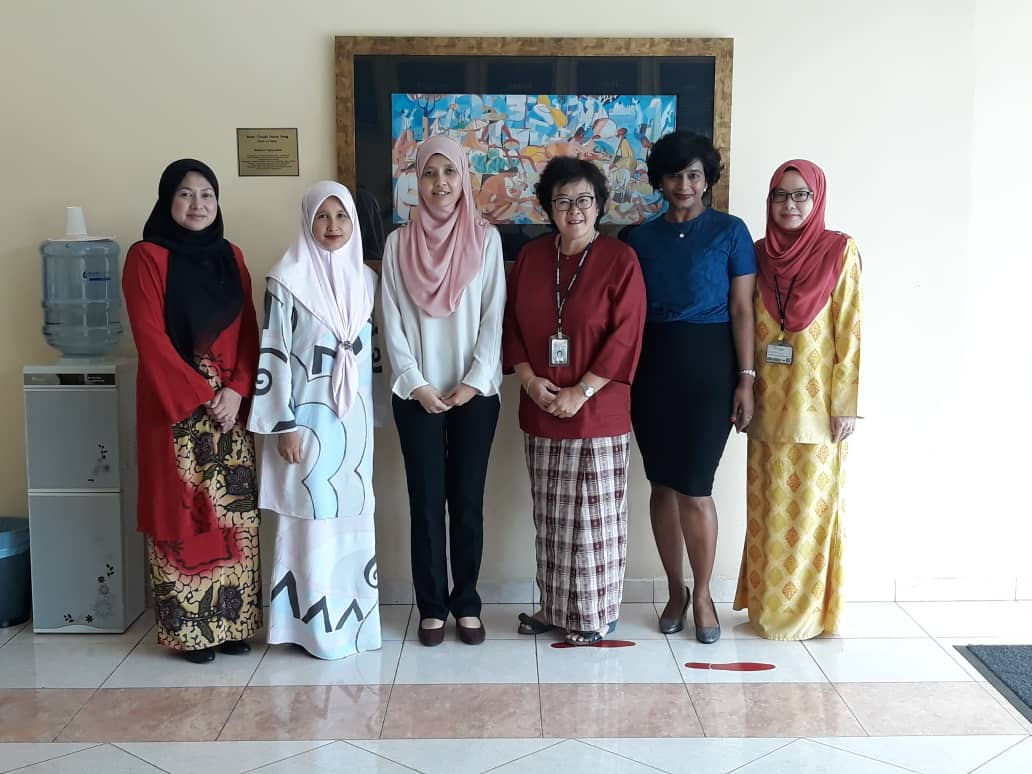
We extend our sincere gratitude to Professor Dr. Edward W. Gregg, School of Public Health, Faculty of Medicine, Imperial College London, United Kingdom, as External Examiner, and Professor Dr. Rafdzah Ahmad Zaki, Department of Social and Preventive Medicine, Universiti Malaya, as Internal Examiner.
We also thank the Committee of Examiners for their thorough evaluation and insightful feedback, including Professor Dr. Jamunarani a/p S Vadivelu, Chairperson of the viva voce session, and Professor Dr. Victor Hoe, Head of the Department of Social and Preventive Medicine.
Congratulations, Ismail, on this important milestone. We look forward to seeing your research contribute to a deeper understanding of diabetes and support more responsive, evidence-based public health practice in Malaysia.




You must be logged in to post a comment.